Asbestos Exposure & Mesothelioma
What Victims Need to Know
Mesothelioma does not happen by accident. It happens because companies used asbestos for decades — in buildings, ships, vehicles, industrial equipment, and consumer products — despite knowing it caused cancer. Workers were not warned. Families were not protected. And by the time most victims receive a diagnosis, 20 to 50 years have passed since the exposure that caused it.
Understanding how asbestos exposure occurs, how it causes mesothelioma, and what the evidence of your exposure means for your legal case is essential — both for getting the right medical care and for pursuing the compensation you deserve.
What Is Asbestos and Why Was It So Widely Used?
Asbestos is a naturally occurring mineral composed of thin, microscopic fibers. It is remarkably resistant to heat, fire, and chemical corrosion, and was inexpensive to mine and manufacture with. For much of the 20th century, these properties made it one of the most widely used industrial materials in the United States.
Asbestos was incorporated into hundreds of products across virtually every major industry:
- Construction: insulation, floor tiles, ceiling tiles, roofing shingles, pipe wrap, joint compound, cement board, and fireproofing materials
- Shipbuilding: insulation for boilers, pipes, engine rooms, and bulkheads throughout naval and commercial vessels
- Automotive: brake pads, clutches, gaskets, and hood liners
- Manufacturing: industrial furnaces, kilns, and equipment insulation
- Consumer products: some talc-based powders and cosmetics, where talc deposits are often found in close proximity to asbestos
The problem was understood internally by many manufacturers far earlier than the public was informed. Internal documents produced in litigation have shown that asbestos companies were aware of the health risks as early as the 1930s and 1940s — and chose to continue production and suppress findings rather than warn workers or the public.
The History of Asbestos Regulation in the United States
The regulatory timeline of asbestos in the United States is long, complicated, and deeply consequential for victims who were exposed during the decades when the industry fought oversight at every turn.
1920s–1930s
The first documented cases linking asbestos to respiratory disease appear in medical literature. Asbestosis — scarring of the lung tissue caused by asbestos fiber inhalation — is identified as an occupational disease. Despite this, industry use accelerates.
1930s–1960s
Internal studies at asbestos manufacturers confirm the link between their products and fatal disease. This information is not shared with workers or regulators. Exposure continues at massive scale in shipyards during World War II, putting hundreds of thousands of military and civilian workers at risk.
1970
The Occupational Safety and Health Administration (OSHA) is established. OSHA begins setting permissible exposure limits for asbestos in workplaces and requiring safety protocols — the first meaningful federal protections for workers.
The Clean Air Act passes, restricting asbestos emissions and establishing protocols for the handling and disposal of asbestos-containing materials.
1971–1980s











How Asbestos Causes Mesothelioma
When asbestos-containing materials are disturbed — cut, sanded, drilled, broken, or deteriorated over time — they release microscopic fibers into the air. These fibers are too small to see and have no odor. They can remain airborne for hours and travel significant distances.
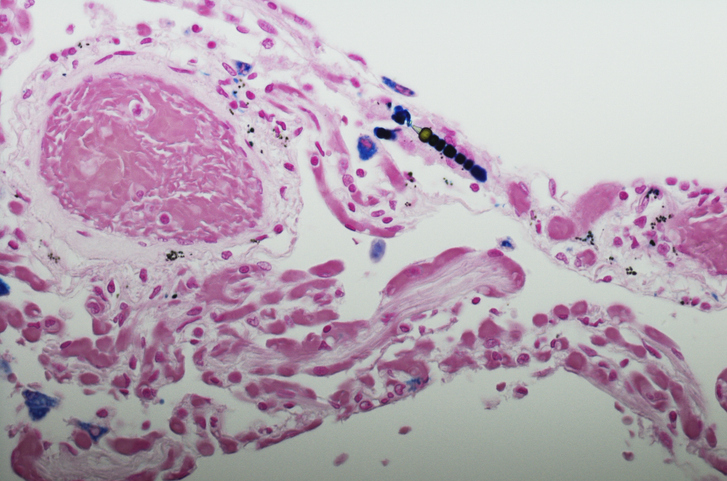
When inhaled, asbestos fibers penetrate deep into the lungs and become permanently lodged in lung tissue or the pleural lining — the thin membrane surrounding the lungs. The body cannot break down or expel these fibers. Over time, the fibers cause chronic inflammation, cellular damage, and scarring. In some individuals, this damage eventually triggers the genetic mutations that cause mesothelioma.
The same process can occur when fibers are swallowed — either directly through ingestion or through fibers that travel from the lungs to the digestive system — leading to peritoneal mesothelioma affecting the abdominal lining.
The latency period — the time between first exposure and diagnosis — typically ranges from 20 to 50 years. This is why most mesothelioma patients are diagnosed in their 60s, 70s, or 80s, often long after they have left the occupation or environment where they were exposed. It also explains why the disease is so commonly diagnosed at an advanced stage: by the time symptoms appear, decades have passed and the cancer has often spread significantly.
There is no safe level of asbestos exposure. Even brief, secondary, or household exposure has caused mesothelioma.

They truly care and get results.

we're ready to help
backed by five-star reviews and over 20 years of experience
When your health and financial future are at stake, having confidence in your legal representation is essential
-
Honesty & IntegrityWe believe in transparent communication, offering candid advice, and always putting your best interests at the forefront.
-
Teamwork & CollaborationEvery case is a collective effort. Our multidisciplinary team collaborates to ensure the best strategy and outcome for you.
-
Diversity & InclusionDiversity is our strength. We celebrate differences, ensuring everyone feels welcomed and represented.
Who Is at Risk? High-Risk Occupations and Exposure Environments
Because asbestos was used across so many industries for so many decades, the population of people with significant exposure history is enormous. The highest-risk groups include:
Occupational Exposure
- Insulators and pipefitters — among the highest-risk occupations, working directly with asbestos insulation materials
- Shipyard workers and Navy veterans — vessels built before the 1980s were heavily insulated with asbestos throughout
- Construction workers — particularly those involved in demolition, renovation, or work on pre-1980s buildings
- Electricians — working in older buildings with asbestos-wrapped wiring and electrical components
- Plumbers — handling asbestos pipe insulation and gaskets
- Automotive mechanics — brake jobs and clutch work on older vehicles involved regular contact with asbestos components
- Boilermakers and power plant workers — boilers and industrial equipment were commonly insulated with asbestos
- Factory and mill workers — particularly in textile mills, paper mills, and chemical plants where asbestos was widely used
- Firefighters — exposure both to asbestos in burning buildings and to asbestos in protective gear used before the 1980s
Military Service
Veterans represent approximately 30% of all mesothelioma diagnoses in the United States. The Navy used asbestos extensively throughout its fleet, but all branches of the military used asbestos-containing materials in barracks, vehicles, aircraft, and equipment. → Learn more about mesothelioma and veterans
Secondhand and Household Exposure
Family members of workers — particularly spouses who laundered work clothing — have developed mesothelioma from asbestos fibers carried home on clothes, skin, and hair. This is known as secondhand or take-home exposure and is well-documented in the medical and legal literature.
Residential Exposure
Individuals who lived near asbestos mines or manufacturing facilities, or who disturbed asbestos-containing materials during home renovation projects, may also have significant exposure histories.
Products That Still Contain Asbestos
Despite the decline in industrial asbestos use, the substance has not been fully eliminated. Several categories of products and environments continue to pose exposure risks:
- Older buildings and infrastructure: Any structure built before the mid-1980s may contain asbestos in insulation, floor tiles, ceiling tiles, roofing materials, pipe wrap, joint compound, or textured paint. These materials are generally not dangerous when intact — but cutting, drilling, sanding, or demolishing them releases fibers.
- Automotive parts: Older vehicles may still have asbestos-containing brake pads, clutch facings, and gaskets. Mechanics working on vehicles manufactured before the late 1980s should be aware of this risk.
- Talc-based products: Talc deposits are frequently found near asbestos deposits, and cross-contamination is a documented concern. Some talc-based cosmetics, baby powders, and industrial talc products have tested positive for asbestos fibers.
- Imported products: The United States continues to import small quantities of asbestos for specific industrial uses, and some imported consumer products — particularly from countries where asbestos is still mined and used — may contain the substance.
- Vermiculite insulation: Vermiculite mined from a specific deposit in Libby, Montana was heavily contaminated with asbestos and was sold as attic insulation under the brand name Zonolite throughout the United States. Homes that contain this product may still pose a risk during renovation.
Recognizing the Signs of Asbestos-Related Disease
Because of the long latency period, symptoms of asbestos-related disease may not appear for 20 to 50 years after exposure. This makes vigilance critically important for anyone with a known exposure history.
Early symptoms — often subtle and easily attributed to other causes:
- Persistent dry cough
- Shortness of breath, particularly with exertion
- Chest pain or tightness
- Unexplained fatigue
Advanced symptoms — as the disease progresses:
- Severe difficulty breathing
- Coughing up blood
- Significant unexplained weight loss
- Swelling in the face or neck
- Difficulty swallowing
- Hoarseness
Symptoms vary depending on the type and location of the disease. Pleural mesothelioma — the most common form — primarily causes chest and respiratory symptoms. Peritoneal mesothelioma causes abdominal pain, swelling, and digestive issues.
If you have a significant asbestos exposure history, do not wait for symptoms to seek medical screening. Regular check-ups with a physician familiar with asbestos-related disease can allow for earlier detection, which meaningfully improves treatment options and outcomes.
Proving Asbestos Exposure: What Evidence Matters
For victims pursuing legal compensation, establishing the connection between a specific asbestos exposure and a mesothelioma diagnosis is the foundation of the case. This requires building a detailed evidentiary record — which is precisely what experienced mesothelioma attorneys do.
- Medical records form the baseline. A confirmed mesothelioma diagnosis — through pathology reports, biopsy results, imaging studies, and treatment records — establishes the disease itself. The type and location of the tumor can sometimes provide additional information relevant to exposure source.
- Employment history is typically the most important evidence in asbestos exposure cases. Detailed records of every job held, every worksite, every employer, and the specific tasks performed allow attorneys to identify which asbestos-containing products were present and which companies manufactured or supplied them. Even partial or informal records are valuable starting points.
- Military service records document the vessels, bases, and equipment a veteran worked with — information that can be directly linked to known asbestos-containing materials and manufacturers.
- Witness testimony from former coworkers, supervisors, or union representatives who can describe the work environment and the presence of asbestos products corroborates the exposure history and strengthens the case.
- Product identification records — including safety data sheets, purchasing records, and manufacturer documentation — establish which specific products were used at a worksite and which companies are liable.
- Expert testimony from occupational health experts, industrial hygienists, and medical professionals provides authoritative scientific testimony linking the documented exposure to the diagnosis.
One of the most common concerns among mesothelioma patients is that they cannot remember the specific details of their exposure — the exact products, employers, or dates. This is expected given the decades that have passed. Experienced mesothelioma attorneys have extensive investigative resources, including occupational history databases, historical product records, and worksite documentation, that can reconstruct exposure histories that patients themselves cannot fully recall.
Asbestos Claim Payouts: How Compensation Is Calculated
Compensation in asbestos exposure cases is not a flat amount — it varies based on multiple factors that your legal team will evaluate thoroughly:
- Severity and type of disease — mesothelioma generally yields higher compensation than asbestosis or other asbestos-related conditions due to its severity and prognosis
- Strength of the exposure evidence — the more clearly documented the exposure history and the more defendants identified, the stronger the case
- Number of liable parties — many victims worked at multiple sites or with multiple products, allowing claims against several defendants or trust funds simultaneously
- Jurisdiction — the state where the case is filed can affect both the available damages and the litigation timeline
- Economic damages — documented medical expenses, lost wages, and future care costs form the quantifiable foundation of any claim
- Non-economic damages — pain and suffering, loss of quality of life, and emotional distress are evaluated alongside the economic losses
Each asbestos bankruptcy trust fund operates with its own payment schedule and eligibility criteria. Some funds pay claims at a fixed percentage of the scheduled value; others evaluate claims individually. An experienced mesothelioma attorney will know the payment history and procedures of each relevant fund and can identify every fund your exposure history qualifies for — a step that many victims and their families would never accomplish on their own.
Statutes of Limitations by State
Every state imposes a deadline — the statute of limitations — within which a mesothelioma claim must be filed. Missing this deadline typically means losing the right to compensation entirely, regardless of the strength of the case.
State | Personal Injury | Wrongful Death |
|---|---|---|
California | 1 year from diagnosis | 1 year from death |
Texas | 2 years from diagnosis | 2 years from death |
New York | 3 years from diagnosis | 2 years from death |
Florida | 4 years from diagnosis | 2 years from death |
Louisiana | 1 year from diagnosis | 1 year from death |
Michigan | 3 years from diagnosis | 3 years from death |
These figures reflect general statutes — specific circumstances can affect applicable deadlines. Verify your state's deadline with a mesothelioma attorney as soon as possible after diagnosis.
The statute of limitations clock typically begins at the date of diagnosis, or the date the patient reasonably should have connected their illness to asbestos exposure. For wrongful death claims, it generally runs from the date of death. Because these deadlines are strict and the evidence gathering process takes time, contacting a mesothelioma attorney promptly after diagnosis is critical.
Frequently Asked Questions
Contact KRW Lawyers for a Free Case Evaluation
If you or a loved one has been diagnosed with mesothelioma or another asbestos-related disease, the exposure history behind that diagnosis is the foundation of your legal case — and building that record takes time. The sooner you contact an attorney, the more we can do.
KRW Lawyers will investigate your asbestos exposure history, identify every company liable for your illness, and pursue every avenue of compensation available to you. Your consultation is free, and you pay nothing unless we win.

-
 What Should I Do if I’ve Been Diagnosed with Mesothelioma Years After Exposure in Texas?
A mesothelioma diagnosis can feel overwhelming — especially when the exposure that caused it happened decades ago. Many ...
- Mesothelioma
Read Post -
 How Can I Tell If I’ve Been Exposed to Asbestos in a Texas Public Building?
Asbestos was once widely used in building materials across Texas — from schools and courthouses to hospitals and ...
- Asbestos
Read Post -
 What To Do If You Suspect Asbestos Exposure: A Step-by-Step Guide
Asbestos is a naturally occurring mineral that has been widely used in construction, shipbuilding, and manufacturing for ...
- Asbestos
Read Post